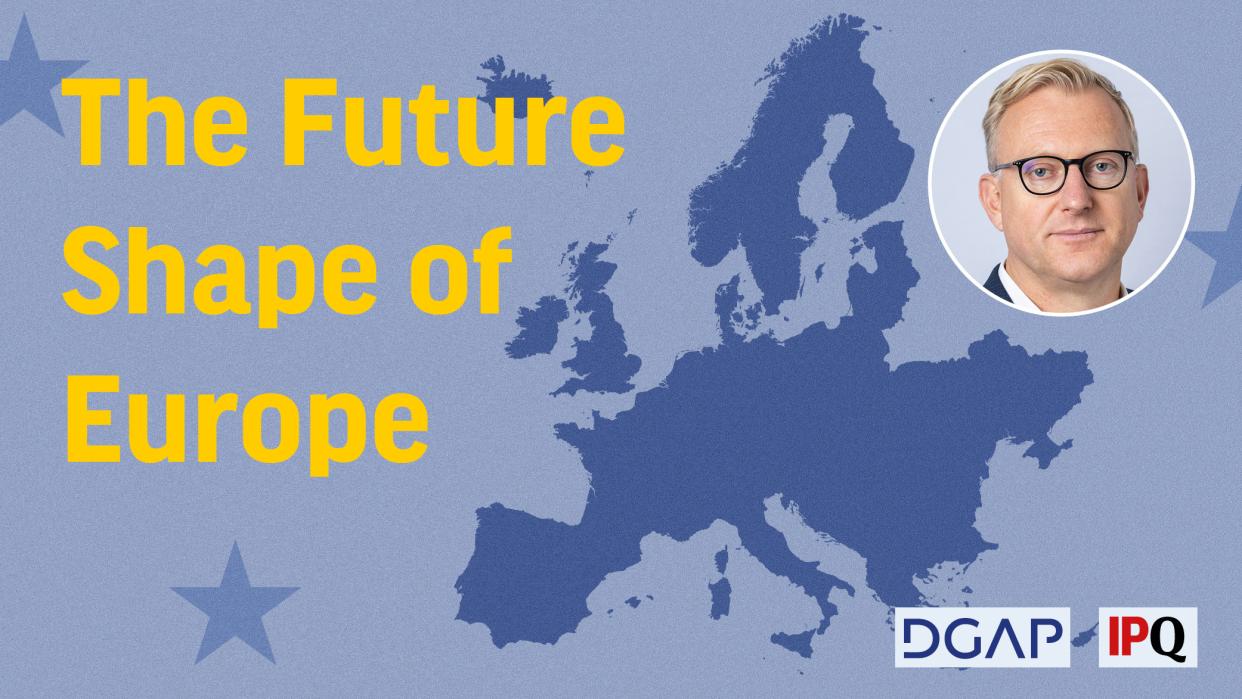
As expected, it was a close result: On August 29, 52.8 percent of Islandic voters rejected their government’s proposal of restarting accession negotiations with the European Union, while 47.2 percent said “yes.” The consequences of the negative outcome of a referendum that Brussels did not ask for, and did not campaign for, will inadvertently hurt the EU.
Blowing Hot and Cold
Iceland’s relationship with the EU has been far from linear. The island country applied for membership in 2009, following the collapse of Iceland’s three biggest banks, when Reykjavik hoped that the EU would provide a safe financial harbor.
However, the protracted eurozone debt crisis that followed evaporated that hope. Accession negotiations were eventually suspended when a Euroskeptic coalition came to power in 2013. By then, Iceland’s economy had recovered strongly, removing one of the main incentives for joining. Public support for EU membership faded as negotiations got stuck on the sensitive issue of fisheries. As a result, in 2015 the Icelandic government told Brussels it would not resume accession talks, and that Iceland should no longer be regarded as a candidate country. However, the original application was never officially withdrawn.
The reversal came in 2024, when a pro-EU coalition government took office. Its coalition agreement included a commitment to hold a referendum on whether to resume the EU accession talks before 2027. Since then, major geopolitical developments have reshaped the international landscape, with US President Donald Trump threatening to seize Greenland—at times mistakenly calling it Iceland—and the Arctic becoming a hotspot for rare earth minerals and new trade routes.
An Economics-Focused Campaign
However, Iceland’s defense alliances (the country is a founding member of NATO with no standing army) and security did not make their way into the campaign. Instead, it remained largely focused on economic issues. Fish and marine industries account for almost 40 percent of Iceland’s exports, and many “no” voters feared that the country would cede some control of their lucrative fishing grounds under the EU’s common fisheries policy.
While the city vote—greater Reykjavik—supported the government’s proposal to try and obtain the best possible deal in membership negotiations with the EU, the rural vote prevailed, driven by fears that power would slip further away from the capital to Brussels.
At the request of the Icelandic government, the European Commission largely stayed out of the referendum campaign. Plain EU propaganda would no doubt have backfired in countering the disinformation spouted by the “no” campaign and circulating on social media. Through simple and subtle messaging, however, the EU could have shown a bit more love for Iceland and its people, in an effort to win over undecided voters and serve its own interests. Now, just as was the case with the 2016 Brexit vote, the EU now has to accept another unsolicited rejection.
Bad Timing
A “yes” vote would not have been the final decision on Iceland joining the EU, but a move toward concluding an accession treaty, whose terms and conditions would then have to be approved by a second referendum.
Similarly, the narrow “no” does not rule out the chance of Iceland resuming talks in the future, even if that prospect now seems remote. Having staked real political capital on a “now or never” framing, the government must now govern with a rural-urban divide laid bare. Whether the coalition survives this setback may end up mattering more to Iceland than the referendum result itself.
In real terms, nothing changes in the bilateral relationship. As a member of the European Economic Area (EEA), Iceland remains tightly tethered to the EU Single Market. It continues to be a participant in the Schengen free-travel zone and remains a security partner.
However, the outcome is nevertheless significant in symbolic terms, even though the EU may now have been spared the humiliation of a negative outcome in a second referendum after two or more years of intensive negotiations.
It’s the timing that stings most. With Arctic shipping lanes opening and great powers circling Greenland’s minerals, the EU has just lost its chance to anchor a like-minded democracy and partner in its Arctic strategy at precisely the moment such partnerships matter most.
The EU has also missed an opportunity to expand its fishing grounds in the North Atlantic, and thus its negotiating position in international fisheries agreements. Brussels will have to pursue its Northern ambitions through looser cooperation agreements instead.
The prospect of adding a net contributor to the EU budget and welcoming another country using the euro as its currency is now also gone.
Reinforcing Enlargement Clichés
The negative consequences for the EU’s enlargement policy are not negligible, either. The referendum outcome reinforces the clichéd perception that membership is attractive only to poorer and conflict-ridden countries, not affluent European democracies. This is wind in the sails of Euroskeptic and enlargement-resistant parties.
The silent hope of some member state governments that pairing Iceland with Montenegro would have increased the chances of ratifying the latter’s accession treaty in wary member states like France has been dashed.
Of course, Iceland’s referendum outcome will not derail other candidate countries’ EU membership bids. If Iceland had moved ahead with negotiations, however, that could have energized the reform drive inside the EU and the accession processes for Albania, Moldova, and Ukraine, even if these three countries’ bids to join had ended up not being packaged with the frontrunners.
In the end, Iceland’s voters chose the devil they know: EEA membership without a seat at the table, market access without a vote on the rules. It is a very Icelandic compromise—close enough to the European Union to benefit, far enough to avoid answering to it. The EU will have to make peace with that arrangement, once again.
Steven Blockmans is deputy director of the International Centre for Defence and Security (ICDS) in Tallinn, Estonia, and an associate senior fellow at Centre for European Policy Studies (CEPS) in Brussels.
