Elections in Germany tend to be closely watched by its neighbors. How Germany votes, which governing coalition emerges as a result, and how stable the incumbent government remains all have implications for the economy and trade, for the “chemistry” of international relations in the heart of Europe, and, not least, for the direction of the European Union.
The attention is mainly focused on elections to the German federal parliament, the Bundestag; however, the Europeans also study state elections when they’re seen as sending a signal about national politics—and rightly so, as the elections in Saxony-Anhalt, Mecklenburg-Western Pomerania, and Berlin have shown. In the first two the far-right Alternative für Deutschland (AfD) emerged as the biggest party and will likely end up governing in Saxony-Anhalt. In Berlin, the far-left Die Linke won the most votes. The outcome of these regional elections will have significant, albeit indirect, European repercussions.
Elections Send Warning Signals
September’s three state elections have plunged Berlin’s governing coalition into an existential crisis. It seems that the coalition parties—the center-right Christian Democrats (CDU/CSU) and the center-left Social Democrats (SPD)—are no longer getting through to people with their domestic policy agenda. Although polls show that a majority of Germans agree on the need for reforms of social security, economic policy, budget consolidation, and defense, the proposed measures have come in for widespread criticism. Here, the downside of Germany’s multi-level system with its numerous veto actors becomes apparent—even though it has often been admired across Europe as “German consensus democracy.”
In addition, the latest election results serve as a warning about the state of social cohesion in Germany. The political center is shrinking, while the fringes are growing—a process that has already led to domestic and European policy upheavals in several neighboring countries. The countries in the Visegrád Group—namely Poland, Hungary, the Czech Republic, and Slovakia —as well as Italy and even Scandinavian countries and the Netherlands are prime examples of this trend.
Now Europeans worry that Germany too might soon get a government that thinks in explicitly national and even nationalistic terms, that is willing to sacrifice Ukraine for cheap energy from Russia, that rejects European and international solidarity, wants to roll back the Europeanization of areas of national sovereignty, considers European migration policy fundamentally flawed, and essentially opposes both the common currency and European Union enlargement—not to mention the ethno-nationalist, racist, anti-pluralist, and illiberal elements of the AfD’s ideology, or its admiration for paternalistic and authoritarian leaders.
Seen in this light, the future of Europe and the EU looks bleak, especially since in France, the Rassemblement National with Marine Le Pen is ahead in opinion polls for the 2027 presidential election, and a return to power of the nationalist-conservative Law and Justice Party (PiS) in Poland appears possible next year as well.
Will the Center Hold?
So, is Europe falling apart from its center? It’s a possibility, and the scenario seems less far-fetched than ever. We’re not there yet, and it doesn’t have to reach that point. But there’s no reason to adopt a soothing “business as usual” approach in European politics. Rather, the specter of a nationalist restoration is obscuring the likely consequences the German elections will have for Europe. These will exacerbate the crisis of direction and leadership in European politics.
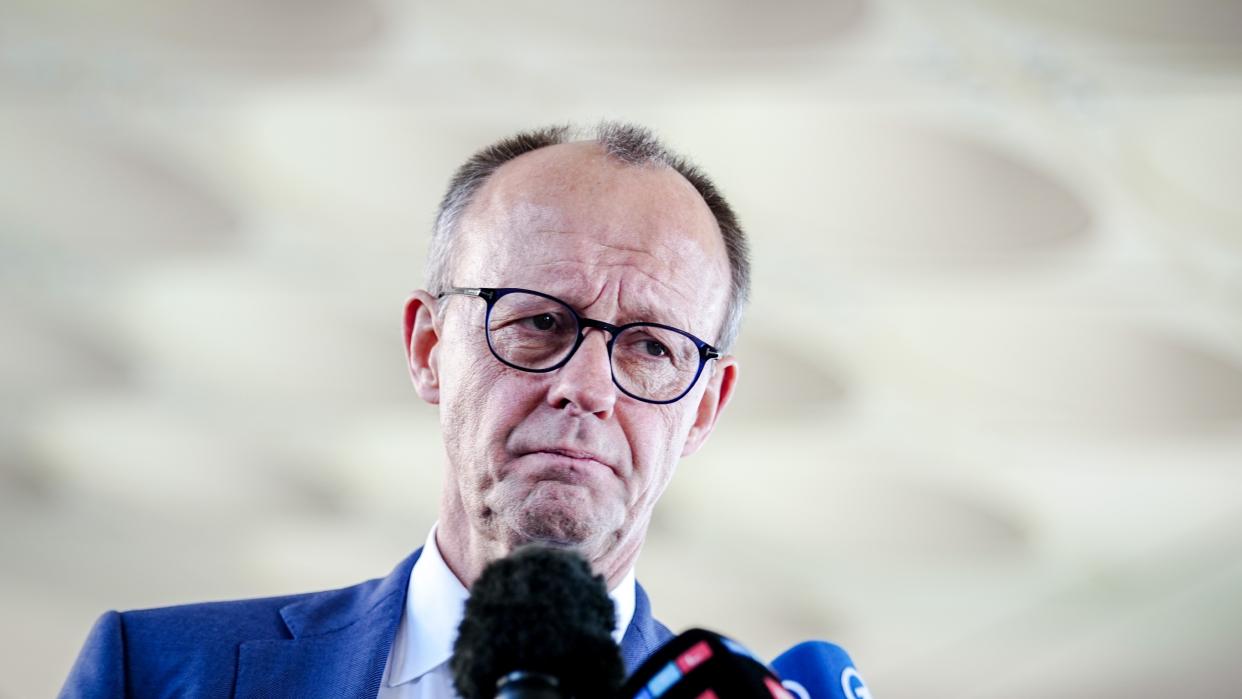
With this election outcome, the CDU faces the possible loss of its status as a Volkspartei or people’s party with a lasting slide below the 20 percent mark and even down into the basement of single-digit results—a process the SPD has been enduring for years, which has visibly led to strategic weakness and short-sighted political maneuvering. The domestic policy core of the ruling coalition—the sustainable reform of the social security systems and the readjustment of taxes and the budget—could be shattered in the ruling parties’ struggle for survival. If the coalition fails to achieve its goals, Chancellor Friedrich Merz will lose his ability to steer policy and his control of his party. New elections would be the logical consequence, as no other conceivable coalition could be formed without the AfD.
In other words: From now on, the Merz administration will devote its full attention to domestic policy; there is neither the time nor energy left for international affairs or Europe. Foreign policy will not save this government; as Außenkanzler(“foreign policy chancellor”), a term often used to characterize his first months in office, Merz is history.
Berlin won’t be a driving force for integration in Europe. Instead, it will focus on advancing its own interests and advantages. Don’t expect major initiatives from Germany to complete the single market or strengthen European competitiveness—it’s more likely that Germany will call for a reduction in regulatory and cost burdens on German companies.
Rather than investing political capital in the integration of European border security or migration policy, Germany will focus on national border controls as the more effective and, from a domestic political perspective, more visible approach. Looking ahead to the EU’s next budget period, the federal government will staunchly defend its austerity preferences. Germany will not undertake any initiatives to integrate defense resources in Europe, but will instead prioritize a national defense strategy.
Rhetoric and Reality
That said, Berlin won’t shy away from pledges and grand declarations about European unity and the need for effective cooperation; semantically, Germany has traditionally played a leading role. But the words mean less and less, and following this fall’s election shock, the gap between rhetoric and reality in German European policy will widen even further. This is precisely where the problem lies for Europe. Both the central organizational structures of European cohesion—the EU and NATO—suffer from a lack of political leadership.
NATO’s leadership deficit is evident. Under US President Donald Trump, the United States has completed its break with its former role as Europe’s benevolent hegemon—a shift that had been apparent since the turn of the millennium, but which had been conducted rather cautiously and tentatively before Trump came along. Donald Trump views the US as the strongest wolf among wolves in a world of great powers that inevitably rival each other, that disregard norms, rules, and international organizations—a zero-sum world. By contrast, NATO’s community of solidarity seems anachronistic; in today’s political climate, even Article 5 of the North Atlantic Treaty appears far less robust than its reputation.
NATO’s ability to promote integration was based on the weight of its most powerful member and that member’s determination to lead the alliance in accordance with its own vision. As long as this asymmetry persisted, NATO was able to act as if it were an integrated institution—despite being, at its core, an intergovernmental organization. No other NATO member can replace this US leadership—not even the two European nuclear powers, nor even Germany with its largest defense budget. At present, only the fear of a complete US withdrawal is preventing the alliance from falling apart.
Effective leadership in restructuring European defense under the current strategic conditions would require a European coalition with the authority to make binding decisions. For such a coalition to be effective, Germany would have to be part of it—not on the sidelines, but at its core.
The EU as a large, heterogeneous, and politically fragmented group is essentially dependent on leadership impetus for its very survival, since the old concept of integration toward an “ever closer union” no longer has traction and because the notion of a linear progression toward “more Europe” was finally shattered with the United Kingdom’s withdrawal. No one believes anymore that power rivalries among EU member states vying to lead the bloc have been eliminated by the structure and culture of the EU’s negotiating system. Even the European Commission, originally designed to be apolitical and technocratic, has now become so thoroughly politicized that its actions are determined more by the moods of public opinion and the balance of power among the political party groups in the European Parliament than by the letter of the treaties.
Any significant policy advances require individual members states to take the initiative, and then coalitions of states are needed to implement them. This was already true in earlier phases of the integration process, but it’s all the more important at a time when intergovernmental conferences or treaties to amend the treaties—which would need to be ratified by all member states—would most likely fail. The future of integration is no longer decided by milestones such as the Treaties of Maastricht, Amsterdam, Nice, or Lisbon, but rather by initiatives modeled on the Schengen Agreement, in which five member states reached an agreement in 1985 on the free movement of persons within the future single market—an issue on which no consensus had previously been reached within the EU. As long as no group of states—including at least one EU heavyweight—comes together to implement its strategic agenda for Europe and, if necessary, pursues it unilaterally, the EU will continue to tread water.
Germany would be the “strategic enabler” of such alliances, both within the framework of the EU or NATO. Berlin’s passivity has the opposite effect. Preserving cohesion and pursuing the necessary strengthening of Europe’s effectiveness depend on the formation of policy-shaping groups that act in a goal-oriented and determined manner. Germany’s willingness to shape policy is a necessary, but not sufficient, prerequisite for this. Berlin should make the creation of such coalitions a priority of German foreign policy.
Friedrich Merz knew this when he set out to redefine Germany’s role in the European context. There is cause for concern that his government will now lack the strength for that, as it is being worn down by conflicts between the ruling parties on the one hand and poor opinion poll ratings on the other. This federal government must “get moving” is a phrase often heard in the corridors of the Berlin Republic. Whether it will manage to get moving with its domestic reform agenda is—to put it optimistically—uncertain. It’s all but certain, however, that it won’t muster the strength to do so at the European level.
—Translated from the German by David Crossland
Josef Janning is Senior Associate Fellow at the German Council on Foreign Relations’ (DGAP) Europe Center.
